 |
 |
Spanish Word of the Day
| September 4th, 2013 at 8:33:31 AM permalink | |
| Pacomartin Member since: Oct 24, 2012 Threads: 1068 Posts: 12569 |
In Spanish it could also have the same meaning as the word does in English (specific; discrete; specialized; distinguished in some way; special -often in negative constructions ) But I believe the primary meaning of the word "particular" can mean personal and private in Spanish or Portuguese. In Mexico (outside of Mexico City) a taxi as we know it in America is often called "taxi especial" . The reason is that cars are often used as small buses, and follow specific routes. They are called "taxi de la ruta" and the more common conveyance. In Mexico city they have buses and subways, so all taxis are for individual hire. |
| September 4th, 2013 at 8:49:53 AM permalink | |
| Nareed Member since: Oct 24, 2012 Threads: 346 Posts: 12545 |
I've never heard the term used. "Taxis" that pick up several people and runa fixed route, as far as I know, are called "peseros." They were common in Mex City, too, until around the late 70s or early 80s. Since then they've been replaced by small vans and mini-buses, In other cities as well, but some cars are still out there. They have them in Toluca, along with bigger buses. Donald Trump is a one-term LOSER |
| September 4th, 2013 at 8:55:50 AM permalink | |
| Wizard Administrator Member since: Oct 23, 2012 Threads: 241 Posts: 6108 |
So, what is particular about this one? Does the libre apply to the type of car, like the driver is free to drive it wherever he wants? Or is it a statement about Nicaragua in general? 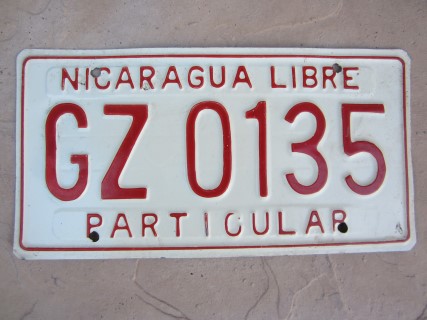 About the taxis, we may have discussed this before, but when I took a cab from the airport in Mexico city I bought a ticket from a booth for a trip to the Zocolo and then presented it to the driver. To get back, I just flagged a cab off the street. The fare from the airport was significantly more. Why was that? Knowledge is Good -- Emil Faber |
| September 4th, 2013 at 9:10:26 AM permalink | |
| Nareed Member since: Oct 24, 2012 Threads: 346 Posts: 12545 |
I'm assuming it means the same thing: a car privately owned by an individual or business, meant to transport people privately. That is, not for hire as a cab and not for delivery of goods.
I've explained that. Airport cabs, in Mex City, have an exclusive right to pick up passengers at the airport, though any cab can deliver passengers to the airport. Other cities ahve different rules. Then, too, airport cabs cannot be flagged on the streets, though they can arrange pickup in advance. And they tend to be newer vehicles, more nicely appointed (ie with working seatbelts and nicer interiors, A/C). You may also have noticed minivans and small vans in taxi livery. These can take on more passengers (cars are limited to four) and naturally carry more luggage. There are no airport shuttles as in Vegas, but Interjet does run shuttles to/from the airport to/from specific points int he city. Donald Trump is a one-term LOSER |
| September 4th, 2013 at 9:23:32 AM permalink | |
| Pacomartin Member since: Oct 24, 2012 Threads: 1068 Posts: 12569 |
I did specify that I meant Mexico outside of Mexico city. The smaller cities initially could not afford buses, so they would use station wagons instead. Tijuana held on longer than most. The city government wanted to replace the route taxis with buses a long time ago, but the drivers locked the city down. Also passengers often prefer the route taxis, as you could get them to stop anywhere and the frequency is very high. The buses have a much lower frequency, and they never stop between designated bus stops. In Mexico city these older systems have long since been retired. The subway was built in the late 60's early 70's. All taxis are private taxis.
 Taxi libre's in Tijuana are metered taxis. I always assumed that they were called that because they were "free" to go anywhere as opposed to the route taxis. A two to one price difference in taxis is not uncommon. The taxis you get from the airport come with a guarantee of personal safety. You pay for that privelage. In a small airport in Oaxaca you could walk to the end of the parking lot, and the taxi fare would drop by at least 33%. Most guidebooks will tell you not to flag down a taxi on the street in Mexico City. A regulated taxi that a hotel front desk will call or at sitios will always be more expensive. But it will always have four doors and you will never be robbed by the taxi driver. Personally, I never paid attention to that advice. I realize that it is possible that I could be kidnapped and hauled to an ATM, but I figure that percentage-wise the odds are actually pretty low. The odds that the taxi driver will try and overcharge you are pretty high, but that he will threaten you with physical harm are pretty low. In Nicaragua the term "libre" on license plates is a political statement. |
| September 4th, 2013 at 9:39:20 AM permalink | |
| Wizard Administrator Member since: Oct 23, 2012 Threads: 241 Posts: 6108 |
I recall you or Nareed giving me that advice about Mexico City, which I didn't follow. I was getting nervous about the time and couldn't find an appropriate sitio. Panama has the same kind of system. The beat up old taxis are cheaper, but the drivers usually don't use air conditioning and they sometimes pick up other passengers. I've noticed the drivers will usually ask about the purpose of your trip and no matter what it is they will try to hook you up with one of their friends who offers said service. The white ones, that look more like privately-owned cars, cost about 25% more, but are comfortable and the drivers are more professional. Some travel sites about Panama warn about the white ones being rip-offs, but I would recommend them, unless you're on a very tight budget. Knowledge is Good -- Emil Faber |
| September 4th, 2013 at 9:55:53 AM permalink | |
| Pacomartin Member since: Oct 24, 2012 Threads: 1068 Posts: 12569 | It seems like a standard problem around the world. Taxis were highly regulated in London, and required that each driver pass a test on the knowledge which was a detailed description of streets in the city. Needless to say, fluency in English is a requirement. So each passenger is guaranteed safety and comfort in a car with massive amount of leg room, and a driver that is familiar with the most remote sections of the city. However, people don't want to pay for that kind of service. Taxi meters are increasingly sophisticated, and can charge you different rates at different times of the day, and make allowances for slow driving in heavy traffic. |
| September 4th, 2013 at 10:13:44 AM permalink | |
| Nareed Member since: Oct 24, 2012 Threads: 346 Posts: 12545 |
I have traveled to other cities. I take cabs often when I do (even, sometimes, when I drive there). When I've asked where to get a cab, i've never been asked which kind I wanted.
Actually in theold days, and some cabs still do this, a cab that was free to be flagged would have a cardboard sign on the windshield which read "LIBRE," as opposed to a cab carrying passengers already. These days in most cabs the meter has a lever. When it's up, it pushes against the windshield and still has the sign, built-in, which reads "LIBRE." When the cabbie pushes it down, it activates the meter. Donald Trump is a one-term LOSER |
| September 4th, 2013 at 11:25:46 AM permalink | |
| Pacomartin Member since: Oct 24, 2012 Threads: 1068 Posts: 12569 |
Article on protest movement in Tijuana because of efforts to eliminate most of the route taxis (dated 2004) Gringo Guide to taxis in Tijuana If you ask for a taxi, the obvious assumption is that you want a private taxi and not directions to the nearest sitio. If you saw a route taxi on the street in a small town, you would recognize it, and not attempt to flag it down. Anyone who lives in Tijuana would recognize that these color coded station wagons are route taxis, but a gringo may easily think that this is the livery of a private taxi company.  In Tijuana if you asked for a taxi, they wouldn't ask you either. But the issue is that gringos will flag a taxi on the street without knowing there is a difference. A route taxi will stop and pick you up, but then the gringo will proceed to give directions or an address and the taxi driver may be confused. He then proceeds to pick up more people. The gringo is confused since taxis in the USA don't pick up additional fares. Further confusion arises because the taxi driver is trying to be helpful and he picks the point on his route that is the closest walking distance to the final destination (which might be several blocks away). The gringo gets agitated because he thinks he should be delivered directly to his destination. There is a sign on the window indicating that the fare is less than US$1, but the gringo may not see it . Side question: At some point in the 20th century the English word "livery" (librea) was extended from a uniform, costume to include the paint scheme on taxis or airplanes. I don't know if the word is used in that way in Spanish. |
| September 4th, 2013 at 12:28:21 PM permalink | |
| Pacomartin Member since: Oct 24, 2012 Threads: 1068 Posts: 12569 |
I know this is an old post, but this tourist map of TJ shows the location of the Pueblo Amigo shopping center. The Hotel Pueblo Amigo is part of the shopping center.  |