 |
 |
License to print money... BitCoin?
| September 21st, 2017 at 1:44:49 PM permalink | |
| Fleastiff Member since: Oct 27, 2012 Threads: 62 Posts: 7831 | BitCoin Exchange Traded FUND to be available in the USA. BitCoin Exchange Traded Note to exist. See: /. |
| September 21st, 2017 at 3:21:30 PM permalink | |
| Pacomartin Member since: Oct 24, 2012 Threads: 1068 Posts: 12569 | This Bitcoin (BTC) Electricity Consumption Index (BECI) is pretty startling. A transaction has jumped from 50 kWh in 2015 to 163-180 kWh in 2017. It's a pretty convincing argument that Bitcoin can never truly function as currency, as the cost of a transaction would overwhelm small purchases. That doesn't mean that BTC will necessarily drop in value. I have been maintaining that if and when the hypothetical central bank cryptocurrencies (CBCCs) come into existence that it will give a newfound legitimacy to BTC. Wizard has been maintaining that CBCCs will replace BTC. The electricity argument makes me think that I was wrong and the Wizard may be correct. The CBCCs will not require the electricity consumption as the CBCCs will not have the requirements to validate transfers that are inherent in BTC. 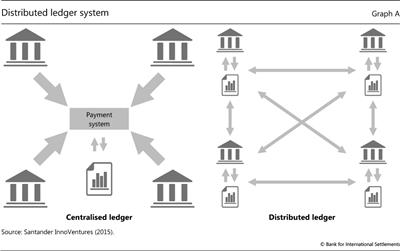 There is an extremely vocal group that likes the anonymous nature of cash (an it is not all criminals). They don't want to be tracked by the government or spouses. But it turns out that a lot of people could care less. They like to get a report from their credit card company. They like the fact that they can question the legitimacy of a transaction. They feel better in control of their money if they have a detailed list of transactions. Sweden has eliminated half their cash in nominal value and more than half as percentage of GDP because of electronic transfers in a system that works through commercial banks. It is not even clear if a significant percentage of people would even bother with CBCC if it is instituted next year. Now if the government institutes a Guaranteed minimum income (GMI) people will become very interested in CBCC. The easiest way to issue a GMI is by way of CBCC. The Alaska Dividend is the closest policy to a GMI in the world today. It has paid dividends to all Alaska residents since 1982. The largest amount ever paid as “the Permanent Fund Dividend” was $2,069, in 2008. |
| September 21st, 2017 at 3:42:14 PM permalink | |
| Fleastiff Member since: Oct 27, 2012 Threads: 62 Posts: 7831 | Zillions of activities take place wherein the fee paid is far less than providing the service. Just processing the checks can cost more than the amount written on it. Now as to 'creating' a bit coin with cpu cycles if BitCoin Commerce increases the system itself is part of the gain so in part you are paying for your bit coin but in part you are paying for the network to exist and function. Though I do often wonder.... how does one audit a BitCoin Vault? |
| September 21st, 2017 at 3:42:42 PM permalink | |
| AZDuffman Member since: Oct 24, 2012 Threads: 137 Posts: 21268 |
Bitcoin is already too slow for small purchases. It is positioning to be the gold standard of cryptos. Not saying it will, just the way it is going. Question is, will people trust a government crypto more? War is peace. Freedom is slavery. Ignorance is strength |
| September 21st, 2017 at 3:50:19 PM permalink | |
| Fleastiff Member since: Oct 27, 2012 Threads: 62 Posts: 7831 | In China they will have to. All others are banned as criminal enterprises. I think all you really need is for the transaction to go thru. Today in post Irma conditions the pharmacy terminal beeped at my card four times before it said approved. Computers, phone lines, a playful lineman? Who knows but latency is tolerable in some circumstances. |
| September 21st, 2017 at 4:42:17 PM permalink | |
| AZDuffman Member since: Oct 24, 2012 Threads: 137 Posts: 21268 |
For as long as they can ban it. USA bans meth and heroin, how well has that worked out?
People will not take delays in approval for a pizza. If I am selling a car, though, we can hang around 20 minutes for it to be approved. In the end it is going to come down to will people use it as a means of exchange. War is peace. Freedom is slavery. Ignorance is strength |
| September 21st, 2017 at 5:19:35 PM permalink | |
| Pacomartin Member since: Oct 24, 2012 Threads: 1068 Posts: 12569 | 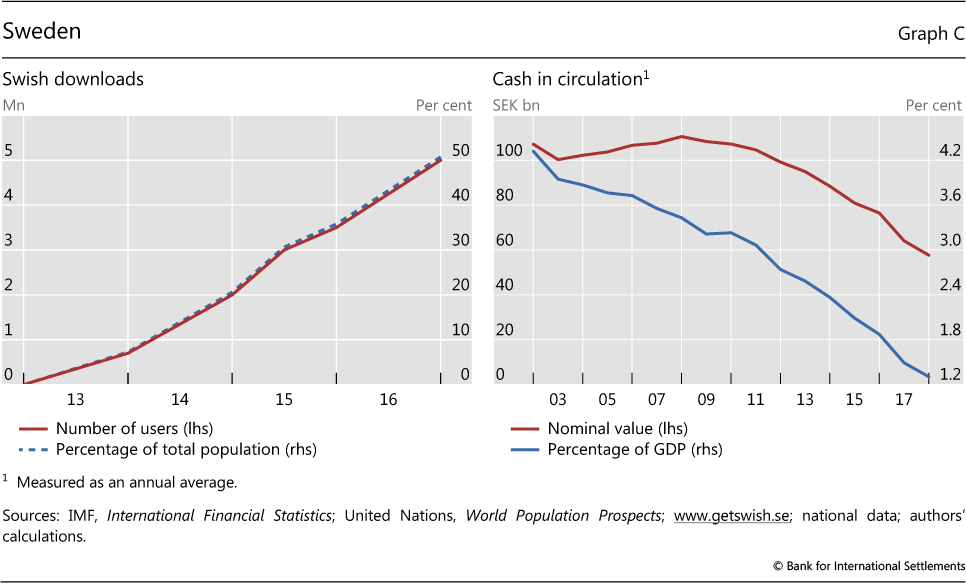
Question is will people even see the purpose of a government crypto currency? People in Sweden like using their electronic debit system from their commercial bank accounts. It doesn't happen very often but sometimes a thug orders a citizen to use their existing SWISH phone app to transfer money into the thug's account. Of course the police catch the thug immediately and the citizen gets his money back. No if the central bank issues a crypto currency set at parity with national currency, than there is no magic jump in value (or massive losses either). The government is highly unlikely to create something that drug cartels can use, so there may be virtual accounts with the central bank (paying zero interest) and there may be checks on withdrawals looking for suspicious activity or fraudulent transactions like the one involving the thug. Your average Sven may see no practical advantage over having both a commercial bank account and a central bank account. The commercial banks may object to the unfair competition from their own government. There are far fewer "unbanked" people in Sweden than in the USA. Dinero electrónico is a mobile payment service in Ecuador where they use the US dollar since the year 2000. But unlike Sweden, 40% of the country is unbanked, and conducting all you business with banknotes can be difficult or even dangerous. Sweden already has what most people want, a way to easily pay businesses or other people from a phone app that has no fee attached. Over 50% of the country has the SWISH phone app now. They may very well reject the e-krona IF IT PASSES and is introduced in the next two years. Now commercial bank money is based on lending. Central bank money is based on the nation and is guaranteed by them. Right now the only kind of central bank money your average person has access to is banknotes and coins. But that distinction is only something that people think about if there is a crisis (like all the banks in Iceland going bankrupt at once). Normally people value cash for four things (1) it always works even if power is down, (2) it is anonymous even if you are just trying to hide a birthday gift from your spouse, (3) it can't be taken back unless at gunpoint. It makes it easy to sell a used car to someone you don't know, (4) it feels tangible so it makes a good wedding gift, or in some cases people think it is easier to be frugal if they pay via cash. Gamblers like the tangibility of cash. |
| September 21st, 2017 at 5:38:26 PM permalink | |
| Pacomartin Member since: Oct 24, 2012 Threads: 1068 Posts: 12569 | WHOLESALE payments It is common to divide payments into retail and wholesale segments. Retail payments are relatively low-value transactions, in the form of eg cheques, credit transfers, direct debits and card payments. By contrast, wholesale payments are large-value and high-priority transactions, such as interbank transfers. These kind of payments may be the best way to utilize central bank crypto currencies. The ability to bypass a central authority may make it much faster than the current systems which use a trusted notary. |
| September 21st, 2017 at 5:39:13 PM permalink | |
| AZDuffman Member since: Oct 24, 2012 Threads: 137 Posts: 21268 |
If it is at parity, it does eliminate the need for a crypto. The base of a crypto is that it cannot be deflated. So many units and no more. It is asset based, not debt based. To loan it out would be a tremendous advantage in that in theory inflation cannot happen, but the same thing means to borrow in it puts one in a harder position to repay, debt will not be inflated away. I suppose parity lowers transaction costs, otherwise isn't it the same as a bank account? War is peace. Freedom is slavery. Ignorance is strength |
| September 21st, 2017 at 8:27:31 PM permalink | |
| Pacomartin Member since: Oct 24, 2012 Threads: 1068 Posts: 12569 | A commercial bank is a for profit institute. They can deny someone a bank account, or set a minimum balance, or fees and penalties. The traditional argument for central bank accounts is that they would service the "unbanked" who often have to spend hours in buildings waiting to pay for a service. In Sweden almost all banks will not accept cash or dispense cash at a teller's window. It can be difficult if you lose or have your identification or ATM card stolen. A couple of blurbs from Riksbank (Federal Reserve of Sweden)
That is the problem as a high percentage of the population is perfectly happy with commercial bank money. They don't worry about the risk of the commercial bank going bankrupt. They don't have more than US$100K in an account. If you surveyed people in Sweden most of them don't see a need for electronic cash. But Iceland functioned fine for twenty years with cash at 1% of GDP which is the level that Sweden is approaching today. USA has cash at about 8% of GDP and Japan at 20% of GDP. Iceland's largest banknote was worth about $78 just before the crash. In 2008 all three of the country's major privately owned commercial banks default. Relative to the size of its economy, Iceland's systemic banking collapse was the largest experienced by any country in economic history. The crisis led to a severe economic depression in 2008–2010 and significant political unrest. Needles to say cash made a huge comeback. Despite losing almost half it's value relative to the Euro it took until 2013 to introduce a new banknote worth twice as much as the old largest banknote. The largest banknote in Iceland was worth $78 ten years ago $55 nine years ago $40 eight years ago $46 worth of same banknote today $93 new banknote issued in 2013 worth twice as much in Icelandic crowns Today Iceland is circulating US$1750 per capita in banknotes and coins, while Sweden is circulating about US$600 in banknotes and coins. It could be that Sweden is always thinking about a massive real estate crash that will break the commercial banks. The difficulty in quickly re-instituting a cash based economy may be swayed by having electronic cash issued by the central bank. |